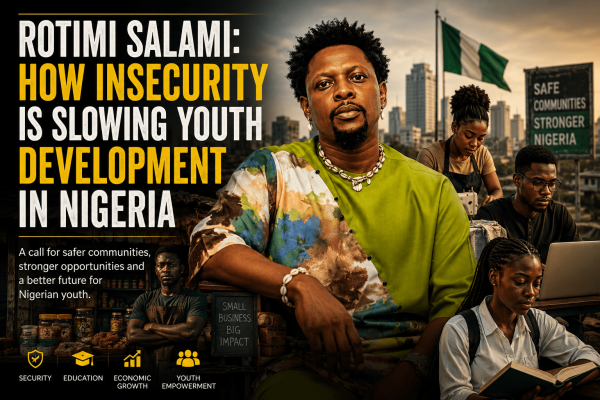
Nigeria’s future depends heavily on its young population. With millions of energetic and talented young people seeking opportunities, the country possesses one of the largest youth populations in Africa. Yet growing insecurity continues to threaten that potential.
Actor and filmmaker Rotimi Salami believes the impact of insecurity extends far beyond headlines about kidnappings, bandit attacks and violent crimes. According to him, the crisis is increasingly affecting youth development, limiting opportunities and slowing economic growth across the country.
As communities grapple with security concerns, many young Nigerians are finding it harder to pursue education, build businesses and contribute meaningfully to national development.
How Insecurity Is Slowing Youth Development And Economic Growth In Nigeria
The relationship between security and development is clear. Young people thrive when they have access to education, employment opportunities and safe environments.
However, insecurity has disrupted many of these pathways.
Across parts of the country, schools have faced closures due to security threats. Communities affected by violence often struggle to maintain educational activities, leaving many young people vulnerable to poverty and unemployment.
Security incidents recorded by the Nigeria Security Tracker continue to show how violence and instability can disrupt education, economic activities and community development across different parts of the country.
Rotimi Salami notes that when young people lose access to education and skills development, the consequences can last for years.
“Every child or young person denied access to education because of insecurity represents a lost opportunity not just for the individual, but for the nation as a whole,” he says.
Don’t Miss: 10 Major Blogs and Newspapers that Featured Rotimi Salami recently — and why it matters
Businesses Struggle to Create Opportunities

Small businesses play a crucial role in youth employment.
Many young Nigerians depend on entrepreneurship and small enterprises for income and career growth. Yet insecurity has increased the risks associated with doing business.
Business owners often face higher transportation costs, increased security expenses and disruptions to supply chains. Some investors are reluctant to expand into areas perceived as unsafe.
As a result, job creation slows.
For young people entering the labour market, fewer business opportunities mean fewer chances to gain experience, earn income and build sustainable careers.
The Impact on Innovation and Entrepreneurship
Nigeria has earned recognition for its vibrant entrepreneurial culture.
From technology startups to creative industries, young Nigerians continue to demonstrate innovation and resilience.
However, insecurity creates obstacles that can discourage innovation.
Entrepreneurs are less likely to invest resources into new projects when uncertainty dominates the business environment. Investors may also hesitate to support ventures in regions facing persistent security challenges.
Rotimi Salami believes a secure environment is essential for innovation to flourish.
“When people feel safe, they are more willing to take risks, invest in ideas and build businesses that create jobs,” he explains.
Communities Pay a Heavy Price
The effects of insecurity are not limited to economic indicators.
Families and communities often bear the emotional and psychological burden.
Young people growing up in environments affected by violence may experience fear, anxiety and uncertainty about the future. These challenges can affect academic performance, career ambitions and overall wellbeing.
Communities that once supported local businesses and educational activities may struggle to maintain normal social and economic life.
The result is a cycle that can slow development for years.
Why Economic Growth Depends on Security
Economic growth requires stability.
Businesses need confidence to invest. Entrepreneurs need safe environments to innovate. Educational institutions need secure conditions to nurture future leaders.
Without security, development becomes more difficult.
According to the World Bank Nigeria Overview, creating conditions that support private sector growth, investment and job creation remains essential to Nigeria’s long-term development. These goals become harder to achieve when insecurity discourages business activity and limits economic opportunities.
Rotimi Salami argues that addressing insecurity should remain a national priority because its effects reach every aspect of society.
Read Also: Beyond Politics: Rotimi Salami Discusses The Real Impact Of Insecurity On Everyday Nigerians
Building a Better Future for Nigerian Youth

Despite the challenges, many young Nigerians continue to demonstrate remarkable determination.
Across the country, students pursue their education, entrepreneurs launch businesses and communities support initiatives aimed at creating positive change.
Rotimi Salami believes hope remains an important part of the solution.
He encourages stakeholders across government, private institutions and communities to invest in programmes that promote education, skills acquisition and youth empowerment.
For Nigeria to realize its full potential, young people must have the opportunity to learn, innovate and succeed without fear.
Creating safer communities will not only protect lives but also unlock opportunities that can drive sustainable economic growth for generations to come.
Frequently Asked Questions
How does insecurity affect youth development in Nigeria?
Insecurity disrupts education, limits employment opportunities and affects the wellbeing of young people.
Why is security important for economic growth?
Security encourages investment, supports businesses and creates an environment where innovation can thrive.
How does insecurity affect businesses?
Businesses face higher operating costs, supply chain disruptions and reduced investor confidence.
What role do young people play in Nigeria’s economy?
Young people contribute through entrepreneurship, innovation, education and workforce participation.
What can be done to support youth development?
Investments in education, skills training, entrepreneurship and community safety can help young people reach their full potential.
Read More: How Insecurity Affects Businesses in Nigeria – Rotimi Salami Speaks